Geofencing is a technology that creates a digital boundary around a real-world location. When a vehicle or asset crosses this boundary, the system triggers alerts, records events, or even performs automated actions.
For example, a fleet manager can see when a truck enters a customer site, prevent unauthorized use outside business hours, or monitor how long a driver spends in a specific zone.
In fleet management, geofencing goes beyond basic vehicle tracking. Standard GPS tracking shows a vehicle's location, while geofencing highlights its interactions with defined areas. This makes it possible to control operations, enforce compliance, and increase security in ways that simple tracking cannot.
How Geofencing Technology Works
Geofencing combines GPS, cellular networks, and mapping software. A geofence is created by drawing a digital perimeter on a map. Once the zone is set, the device continuously compares the vehicle position with the geofence boundaries.
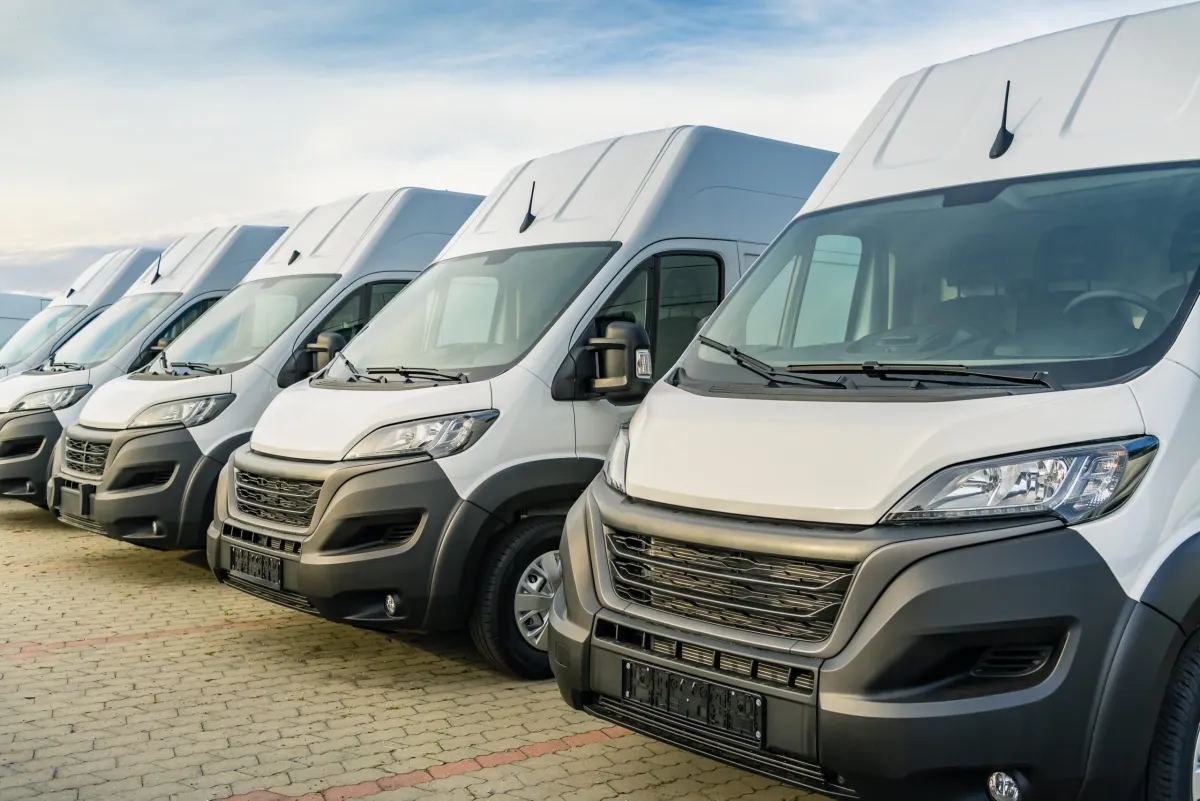
When a vehicle enters, leaves, or stays in the geofence, predefined rules are activated. These rules can generate notifications, create log entries, or even trigger physical actions such as activating a digital output (e.g., immobilizing the vehicle).
Key Technical Aspects
- Boundary definition: Geofences can range from a simple circle with a 25 m radius to highly detailed polygons with multiple points. Ruptela devices support up to 250 geofences and 600 points in total.
- Triggers and events: Entry, exit, dwell time, and speed conditions can all be monitored.
- Priority zones: When multiple geofences overlap, the system assigns priority to the smaller area, ensuring accurate reporting.
- Buffer tolerance: A 20 m buffer prevents false positives when vehicles are close to a boundary.
Common Use Cases of Geofencing
Fleet and asset tracking: Companies use geofencing to monitor fleet movement, ensure drivers follow planned routes, and confirm timely arrivals at depots, customer sites, or fueling stations.
Marketing and location-based notifications: Carsharing or rental companies can place a geofence around a city center and trigger special offers when customers drive into the area.
Driver time tracking and access control: Driver working hours can be logged based on arrival and departure from worksites. Vehicle access can also be restricted: if a truck leaves a designated zone, the system can trigger a digital output to cut power or alert the manager.
Benefits of Geofencing
- Increased efficiency and automation: Arrival and departure events are logged automatically, reducing manual reporting.
- Improved security and control: Theft or unauthorized use is detected instantly, and vehicles can be immobilized when leaving a restricted zone.
- Enhanced customer engagement: Accurate arrival times and service updates improve customer trust.
- Real-time data and insights: Dwell times, stop durations, and route deviations are recorded, creating actionable insights for better planning.
Key Capabilities
- Customizable geofences: Define circular, polygonal, or multi-point zones with precision.
- Scalable setup: Up to 250 geofences supported (100 for specific devices), with unique IDs and grouping options.
- Integrated control: Trigger digital outputs such as driver alerts or immobilization when a geofence is crossed.
- Cross-device compatibility: Supported on both 4th and 5th generation devices with the latest firmware.
Frequently Asked Questions
Is geofencing the same as GPS tracking?
No. GPS tracking shows a vehicle's position, while geofencing adds rules and triggers when vehicles interact with predefined areas.
How many geofences can be used at once?
Ruptela devices support up to 250 geofences and 600 points in total.
Does geofencing work in remote areas with poor signal?
Geofencing relies on GPS/GLONASS/GALILEO for positioning. In areas with weak satellite coverage, accuracy may be reduced. Cellular data is needed to transmit events in real time, though data is stored and uploaded once the connection is restored.
Can geofencing trigger hardware actions?
Yes. Ruptela devices can utilize digital outputs to immobilize a vehicle exiting a secure zone, sound an alert to the driver, or log specific sensor values when within a geofence.